
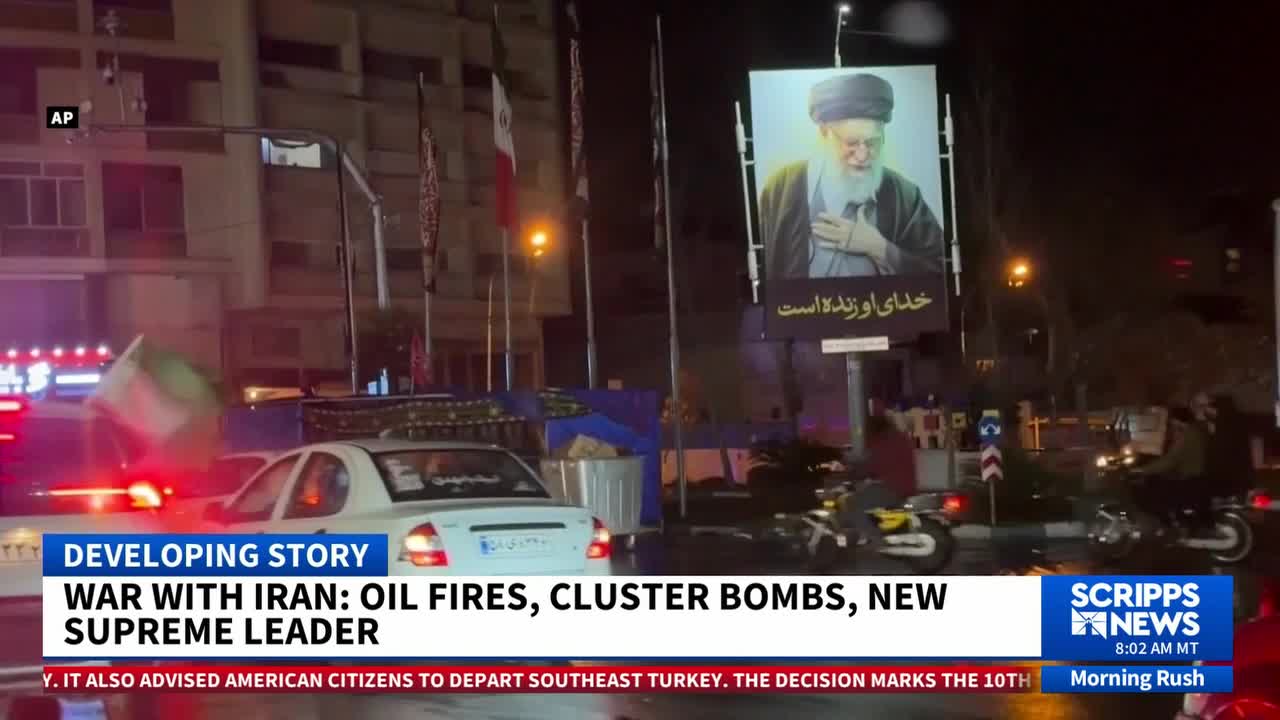


The war in the Middle East appears to be intensifying, with Iran striking multiple U.S. and Israeli interests across the region.
On Sunday, an Iranian ballistic missile carrying a cluster warhead scattered bomblets and shrapnel across 21 sites in the Tel Aviv metropolitan area. Two people were killed and six were wounded.
Elsewhere in the region, the state-owned Bapco refinery in Bahrain declared force majeure after Iranian drone strikes damaged the facility and wounded 32 people, including a two-month-old child. Saudi Arabia said it intercepted five drones targeting the Shaybah oil field. A government building in Kuwait City also caught fire over the weekend, and the United Arab Emirates scrambled gunships to shoot down Iranian drones.
RELATED STORY | US warns Iran is using populated areas as military launch sites, urges civilians stay home
Meanwhile, Israeli warplanes have struck Iran’s fuel depots directly for the first time, targeting infrastructure that is the lifeblood of the Iranian military. Fires from the strikes were still spreading.
At the same time, a major political shift is unfolding in Tehran. Following the killing of Ayatollah Ali Khamenei, Iran’s ruling establishment has named his son, Mojtaba Khamenei, as the country’s third supreme leader. The appointment, endorsed by Iran’s Revolutionary Guard, was described by supporters as a “new dawn.”
The 56-year-old cleric and war veteran is widely seen as representing a seamless transition to a permanent wartime footing.
RELATED STORY | Mojtaba Khamenei, son of Iran's late supreme leader, named his successor
