


Consumer spending data often provides a glimpse into the future — revealing which products Americans are likely to prioritize. For 2026, new projections show some surprising trends.
New data from LLC Attorney, a consulting firm that advises businesses, looked at where consumers will spend money over the next five years. As expected, food dominates the forecast.
"The reality is, is once again, we have to eat," said Miranda Marquit, senior editor at WSJ Buy Side. "And so we've got tariffs, supply chain issues, we've got an interconnected global economy even when it comes to food, and there are things that we as Americans are used to having on our dinner tables."
RELATED STORY | The vast majority of US adults are stressed about grocery costs, an AP-NORC poll finds
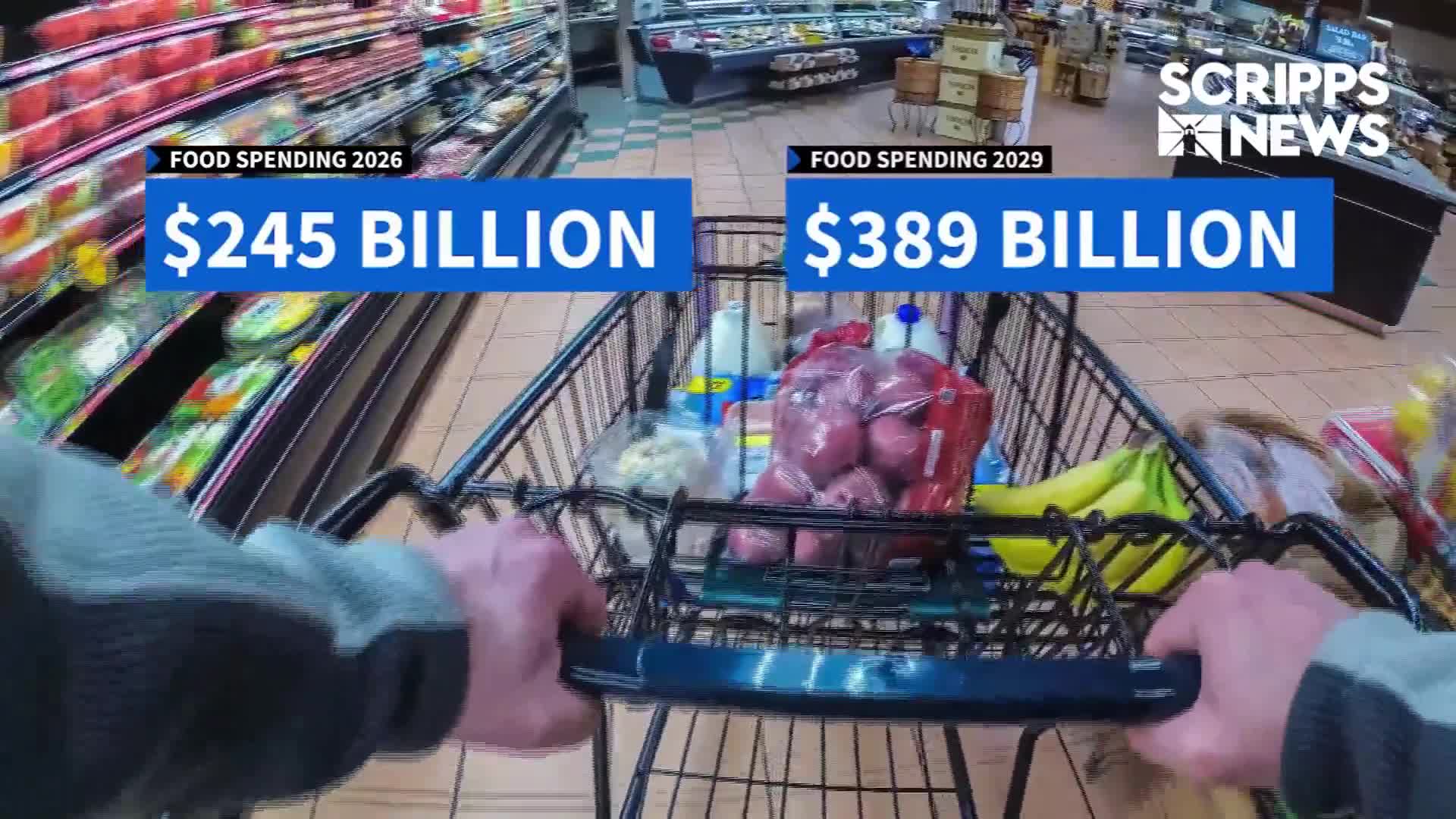
Food spending is projected to climb from $245 billion in 2026 to $389 billion in 2029. That’s more than 12% annual growth, driven by rising demand for home cooking, meal kits and ready-to-eat options.
"Do you need those subscription boxes? Can you cut some of that stuff out?" said Marquit. "So a lot of it does come down to well, what can I do? Where am I spending my money and what matters to me?"
The surprise in the data: tobacco products are the second fastest-growing category. Spending on cigars, e-cigarettes and vapes is expected to increase about 12% per year, hitting $61.5 billion by 2029.
IN CASE YOU MISSED IT | FDA proposes reducing nicotine levels in cigarettes to nonaddictive levels
A study this summer by the Cato Institute found that even with tax hikes, tobacco users continue to buy products. While cigarette consumption is declining, demand for smokeless tobacco, cigars and e-cigarettes is growing, according to ResearchAndMarkets.com.
Household essentials such as paper goods and cleaning supplies are also projected to see more than 10% annual growth.
"And so it really does take a little bit of stepping back and saying, I understand that there's some uncertainty here, and I may have to make some choices, and kind of face that reality, which is never very pleasant for any of us," said Marquit.
WATCH | Consumer confidence does not match what official reports say about the economy
