

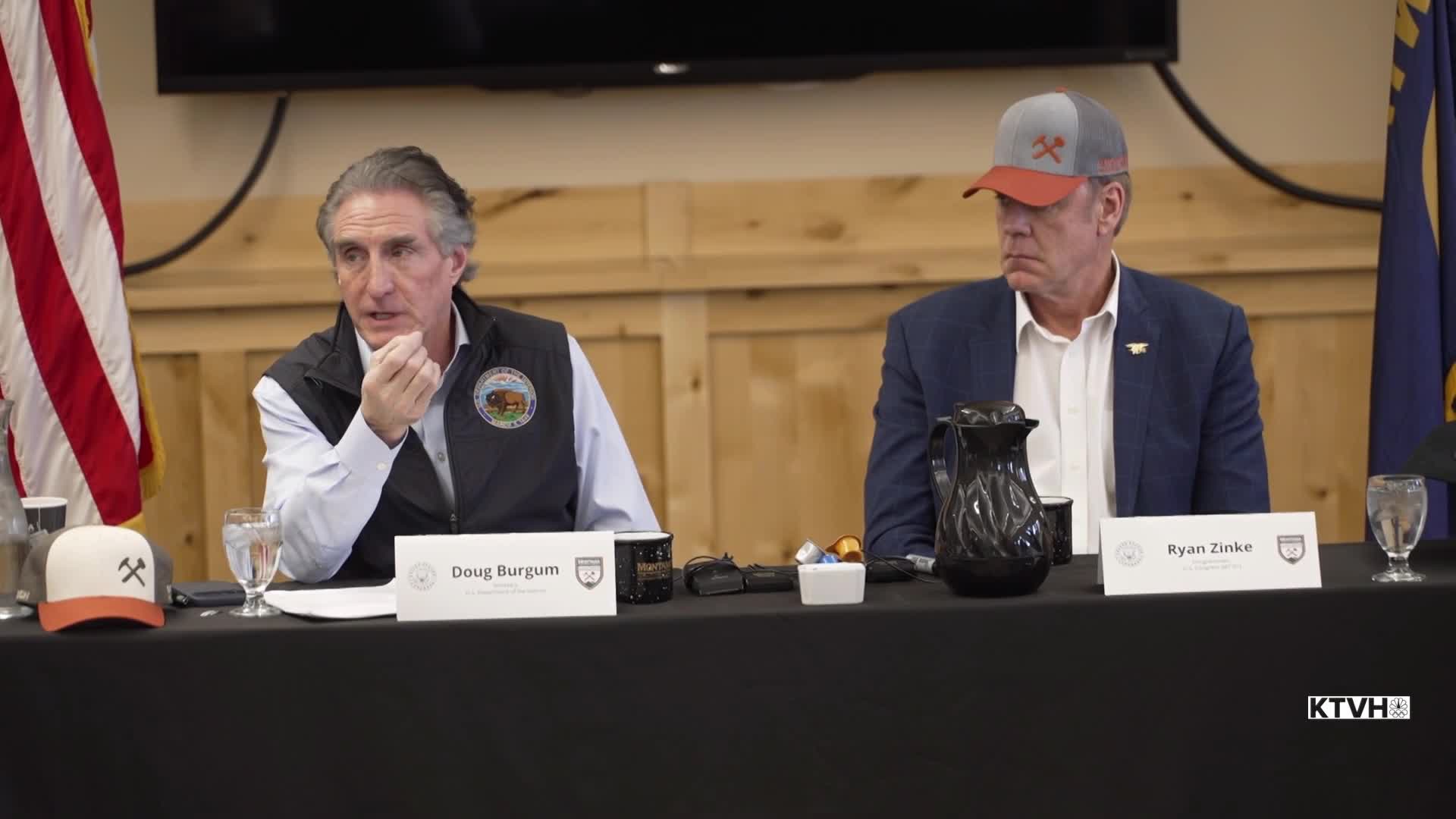



BUTTE — U.S. Secretary of the Interior Doug Burgum said Friday that the work being done at Montana Technological University – and in the rest of Butte – is going to be key, as the federal government puts additional emphasis on mining and producing critical minerals.
“Every single one of the graduates that's coming out of here is a patriot that's making things happen for our country, and we're grateful to be here,” Burgum said.
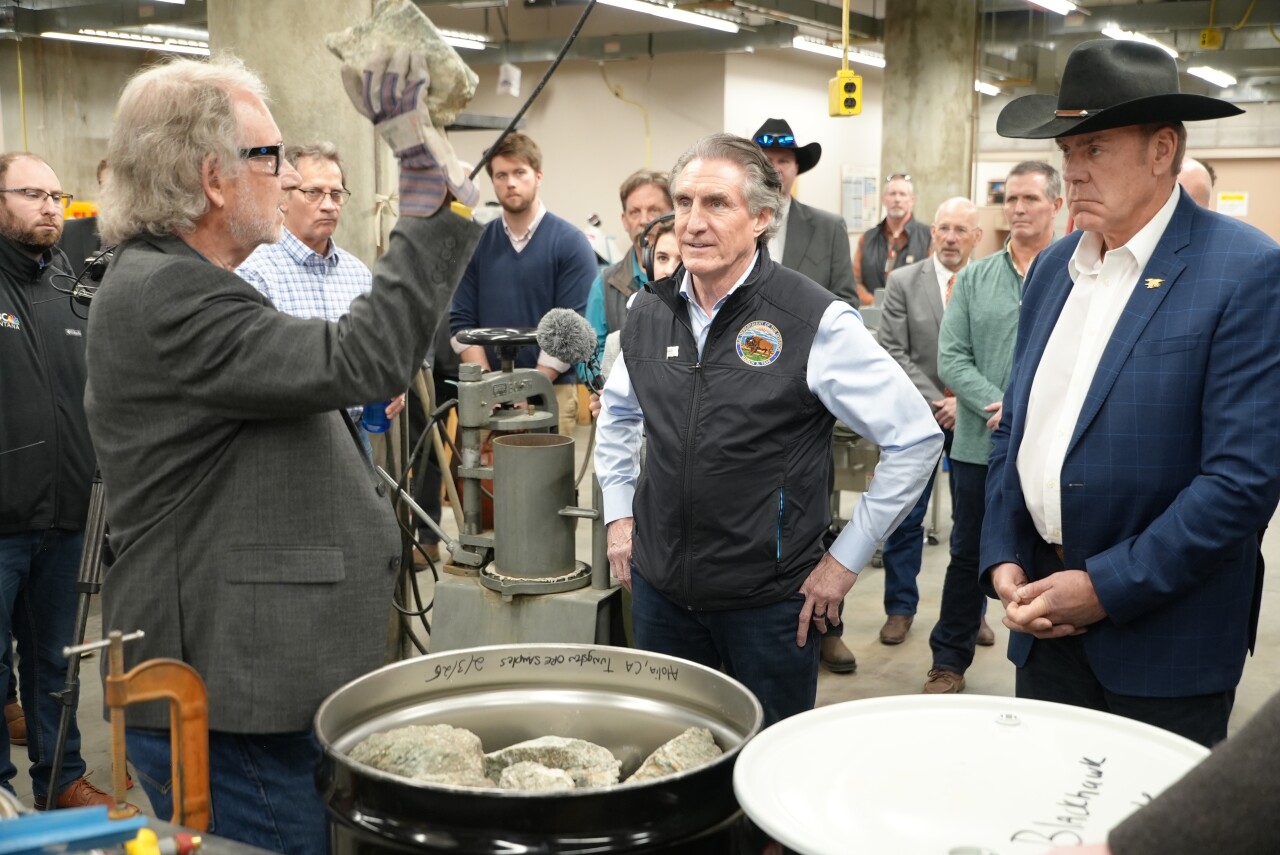
He and U.S. Rep. Ryan Zinke toured Montana Tech, where they met with educators and with representatives from the mining industry and other industries that rely on what miners produce.
(Watch the video to see more from Burgum and Zinke's tour.)
The U.S. government currently defines about 60 critical minerals – minerals leaders have determined are essential to economic or national security and that have supply chains vulnerable to disruption. The list includes a wide range of products: from copper and silver, to uranium, to the rare-earth elements that are commonly used in high-tech and defense applications.
On Friday morning, Zinke and Burgum visited a Montana Tech lab, where they saw several systems being worked on that are designed to more efficiently identify and process these sought-after minerals. Many of them are currently in the “bench scale,” meaning they’re being evaluated at a small scale to see if they’re feasible before being scaled up.
“We've already proven out the bench scale; now the next step is to take some of these processes to the pilot scale,” said Johnny MacLean, chancellor of Montana Tech. “Once we prove them out at the pilot scale, they can go into commercial and industrial scale.”
Jerry Downey, head of Montana Tech’s Department of Metallurgical and Materials Engineering, told Burgum and Zinke one of their major challenges is consistency in funding.
“What we experience with our research funding is it goes in cycles,” he said. “Much of my group – I've got a crack team put together to do all these things – but if the funding runs out, they're not going to stick around.”
After the lab tour, Burgum and Zinke held a roundtable discussion with Montana Tech staff and industry representatives.
“We want to ‘Make America Mine Again,’” said Matt Vincent, executive director of the Montana Mining Association. “We want to ‘Map America’s Minerals Again.’”
The Trump administration has framed increasing critical mineral production in the U.S. as a national security issue.
“It's absurd that we would allow our defense systems in our country to be dependent on our adversaries for key elements that we need,” Burgum said.
“We're going to have to mine it and then process it, so we have to control that entire supply chain,” said Zinke – himself a former Secretary of the Interior during Trump’s first term.
Burgum and Zinke argued mining can be done in an environmentally responsible way, and that allowing other countries with weaker environmental regulations to take the lead on critical mineral development wouldn’t be an improvement.

During the roundtable, speakers like Aaron Tenesch, a vice president with U.S. Antimony, warned about what they considered unfair competitive practices by China to undercut U.S. companies’ prices and make it harder for them to remain in the critical mineral business.
“There’s no way to change this unless we create our own market,” he said.
Jack Standa, president of Montana Resources, said mining has been going on in Butte for 150 years, and his company expects to continue mining there for at least another 30. However, he said they have concerns about whether they’ll continue to have sufficient reliable low-cost electricity, and while he believes there’s been good progress in getting workers trained for the trades, he still sees a need for specialized professionals like engineers and geologists.
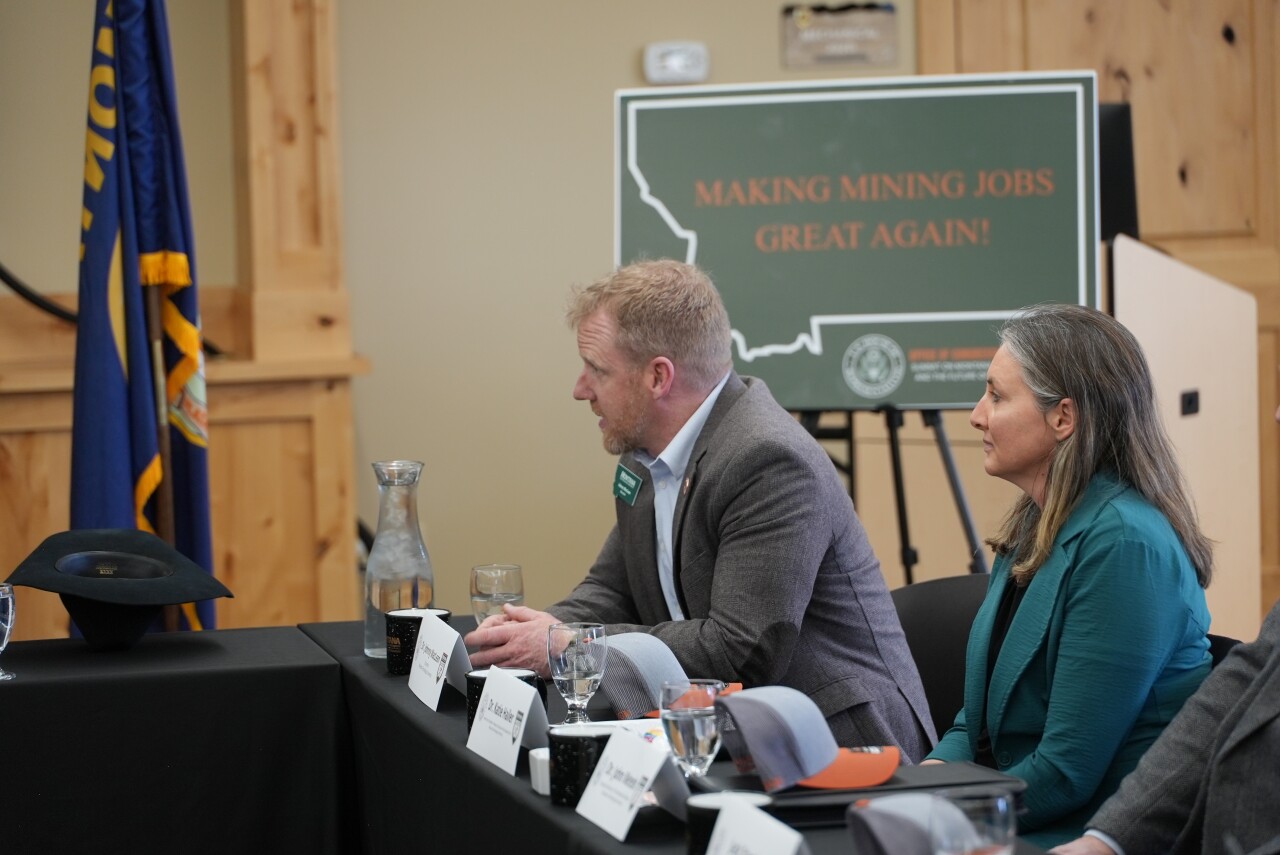
MacLean says Montana Tech wants to be part of the solution for providing those skilled workers. He says the university will be submitting proposals for grants, research funding and equipment with the goal of continuing to keep their research advancing.
“Undergraduates and graduate students are hands-on involved with this research,” he said. “Our graduates are coming out ready for the workforce because of that mentorship that they get from our expert faculty.”
Earlier this month, the Trump administration announced “Project Vault,” a planned $12 billion project to develop national critical mineral stockpiles. Burgum said during Friday’s roundtable that it would make the most sense to host those stockpiles near where the materials are produced, so Montana will be in a good position to compete for some of them.
