

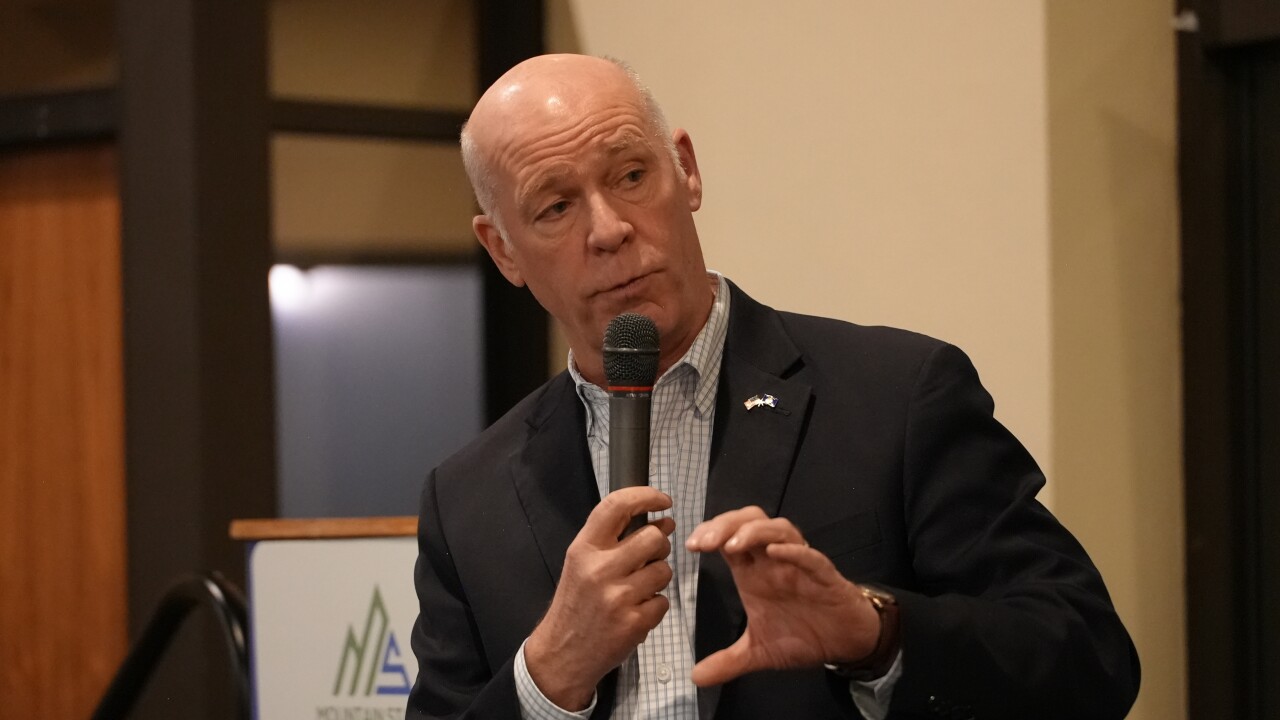



HELENA — On Tuesday night, Governor Greg Gianforte was the featured speaker at the Mountain States Policy Center’s “policy dinner” in Helena. Gianforte was focused primarily on tax policy, but the topic that drew the most attention ahead of the event was one he didn’t speak about: the future of Montana’s state constitution.
Video - what was discussed at MSPC's policy dinner:
MSPC describes itself as a think tank that promotes free markets and limited government. It operates in four states: Montana, Idaho, Wyoming and Washington.
In a discussion with MSPC president and CEO Chris Cargill, Gianforte laid out his policy priorities for the 2027 Montana legislative session – which will be his fourth and final session as governor.
“We have a couple of things we're going to work on this next session, because there's still a few rocks in the rock pile,” he said.
At the top of his list was tax reform. Gianforte restated his goal to again lower Montana’s top income tax rate and get the state to a “flat tax.”
“A flat tax is a fair tax,” he said. “If you make more, you pay more. If you make less, you pay less.”
The Legislature passed and Gianforte signed bills that lowered the top income tax rate in 2021 and 2025. The latest was HB 337, which will set the top rate at 5.4% in 2027. Montana currently has only two tax brackets, with the lower rate at 4.7%, and Gianforte said he eventually wants all taxpayers regardless of income to pay 4.7%.
Cargill told MTN a flat tax is a priority for MSPC, and that it would help Montana remain competitive with other states in the region.
“I think we have enough evidence from the other states that show that it is enormously helpful, especially for folks who are on the lower income side, to not have to have as much money taken out of their paychecks each and every week,” he said. “Whereas if you try to, tinker around the edges of other tax policy, sometimes it can take a while to show up.”
Cargill said they’d like to see leaders look at trigger mechanisms that could automatically lower the tax rate further if the state sees continued strong revenue.
In addition to income tax reform, the other priorities Gianforte named for 2027 included further reducing the business equipment tax, expanding school choice and addressing the impacts of social media on young people.
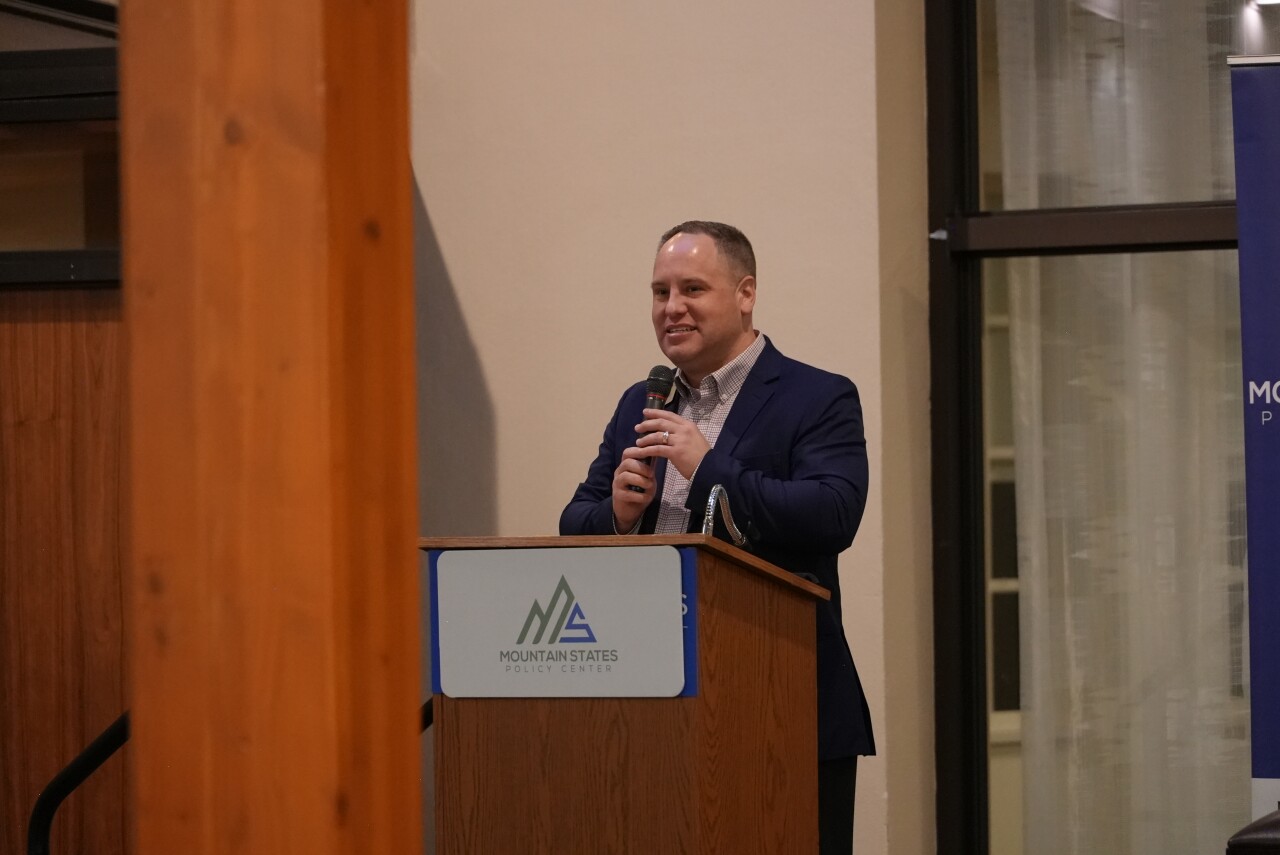
The second major item on the agenda at the policy dinner was whether Montana should hold a new state constitutional convention. The 1972 constitution included a provision that guaranteed the public would vote every 20 years on whether the state should assemble a convention to revise or rewrite it. The next vote will be on Montana’s ballot in 2030.
Cargill said MSPC wants to make sure people are aware of and engaged with that vote when it happens.
“We're really in a unique opportunity here where Montanans can come together and decide whether they want to rewrite the state constitution,” he said. “Some of the things they may want to keep, some of the things they may want to adjust, they may want to change – and I think that's the point.”
The dinner included a presentation by Rob Natelson, an MSPC senior fellow and former law professor, who argued the Montana Constitution had some good qualities but that it contained some contradictory language, that it left too many terms ambiguous, and that the Montana Supreme Court had interpreted it too broadly. In recent years, a number of laws passed by legislative Republicans and signed by Gianforte have been blocked by judges citing the state constitution.
Cargill told MTN he thought a vote to revise the constitution in 2030 could be an opportunity to simply clean up some of the language, but also to add in more “financial safeguards,” like supermajority requirements to increase taxes.
“The one thing you do want out of your Constitution is some stability, some continuation, and I think that's what we have the opportunity to look at with this convention,” he said.

However, MSPC’s announcement that constitutional revision would be discussed at the dinner also sparked opposition. Before the event, several dozen protesters gathered outside, holding signs, beating drums and ringing bells to signal their support for the current constitution.
“Montanans are very proud of our strong constitution,” said Scott Story. “We love that it protects the land we care about, the people we care about, health care.”
Story said he was worried any changes to the constitution would erode the rights established in it.
“On MSPC's website, they talk about an activist Montana Supreme Court,” he said. “Many of us don't see it that way; we think that the Montana Supreme Court has stood up for Montanans’ rights.”
Story held a sign addressed to Gianforte. While the original invitation to the event highlighted both the governor’s attendance and the discussion on the 2030 constitutional vote, Gianforte did not address that issue at the dinner, and MSPC leaders stated that the governor hadn’t been involved with bringing the issue forward.
Montana’s constitution is the fifth newest among U.S. states. Only Louisiana, Georgia, Rhode Island and Alabama have adopted constitutions more recently than 1972. Still, Cargill says he believes there will be people ready to consider making changes again.
“If you think about it, we've gone through two or three generations now, at least, since our last state constitution was put in place, and I know many people would love the opportunity to come in and, if for no other reason, just be involved in that history,” he said.
