



FERGUS COUNTY — As Montana moves closer to fire season, some landowners in central Montana are taking steps now to reduce the risk around their homes… before a wildfire ever starts.
In Fergus County, a fuels mitigation program is helping property owners clear dense vegetation in areas where homes and dense forest meet, often referred to as the wildland-urban interface. The effort is designed to slow the spread and intensity of potential wildfires while improving safety for both residents and firefighters.
Madison Collier reports - watch the video here:
The program operates as a cost-share grant through the Bureau of Land Management, covering about 75 percent of the cost of mitigation work, with landowners responsible for the remaining portion.
“We’ve got a fuels mitigation grant program… it’s a 75-25 BLM cost share… and it helps protect the homes, and it protects more than just the homes,” said Donna Sonnemaker-Stafford with the Fergus Conservation District.
According to Sonnemaker-Stafford, the program has been available on and off since 2002, and more than 650 acres have been treated over time.
For landowner Trey Gacke, the program made a project possible that would have otherwise been difficult to complete alone.
Gacke said he first learned about the program through a brochure and reached out to the conservation district for more information. After a walkthrough and assessment, he moved forward with a project that ultimately covered about 18 acres of his property.
“Looking at what needed to be done, I couldn’t do it by myself. It would have taken so much longer to do,” Gacke said.
The work involved a combination of mechanical and manual clearing. Contractors used equipment to break down dense vegetation, while hand crews followed behind to cut and pile material that machinery couldn’t reach.
The result, Gacke said, is a property that is not only safer but easier to maintain going forward.
“Now that they’ve cleared this initial part out… I can actually get in there and maintain it… I at least have a fighting chance now,” he said.
While the program is focused on individual properties, Sonnemaker-Stafford emphasized that the benefits extend well beyond a single home.
“It doesn’t just protect his property… it protects everybody else’s too,” she said.
By thinning vegetation, the work can help slow a fire’s spread across a larger area. That, in turn, can make conditions safer for firefighters, especially in remote or hard-to-reach locations.
In addition to fire prevention, landowners say the changes can also improve the overall health of the land.
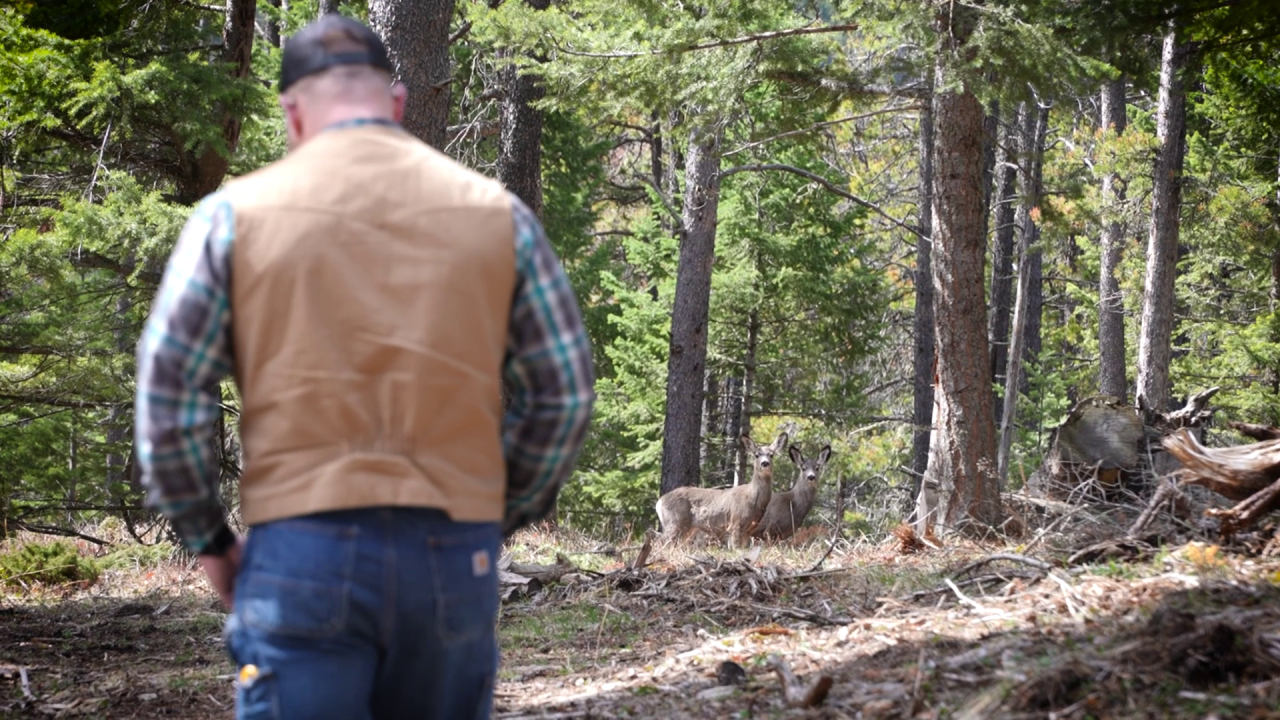
Gacke noted that opening up dense tree cover allows more sunlight to reach the ground, encouraging the growth of grass and native plants… something that can benefit wildlife.
“From a habitat standpoint for wildlife… that’s going to allow more opportunity for wildlife to come in,” he said.
While this project took place in Fergus County, Sonnemaker-Stafford said similar programs are available across the state through conservation districts and other agencies.
She encourages landowners to reach out locally, even if they’re unsure whether they qualify.
“It doesn’t cost anything to call in and to have our forester come out and give you a cost estimate… it doesn’t hurt to ask,” Sonnemaker-Stafford said.
Applications are accepted year-round, and officials say the earlier landowners begin the process, the better… especially as fire seasons continue to shift and conditions remain dry in parts of Montana.
For Gacke, the decision ultimately came down to preparation, not just for his own property, but for the broader community.
“The more that we can get involved… we’re spreading the ability to save each other’s houses,” he said.
