

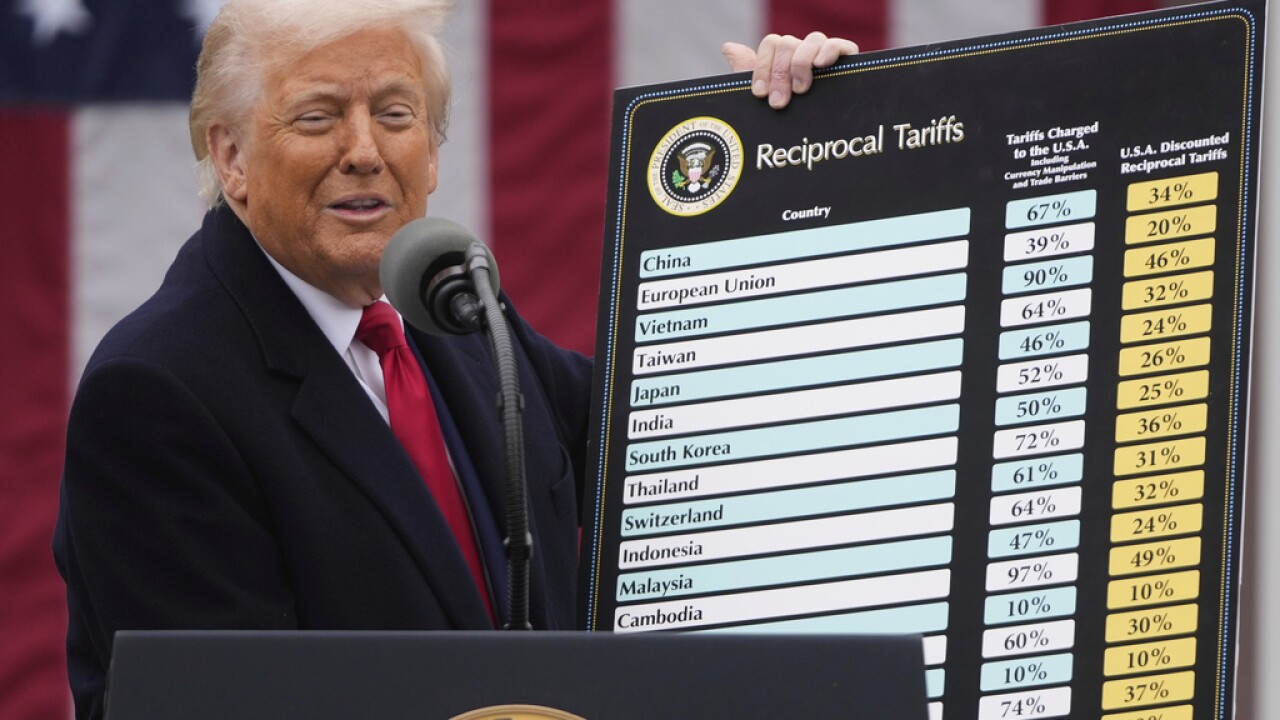


Nearly a year after President Donald Trump announced his “Liberation Day” tariffs, small businesses across Montana say they are still dealing with the fallout, from higher costs and delayed hiring to continued uncertainty over what tariffs will remain in place.
New trade data estimates Montana businesses paid roughly $42 million in tariffs over the past year tied to those policies, and business owners say the cost has been felt both at the company level and by consumers.
Aneesa Coomer reports - watch the video here:
In Bonner, Jess Nepstad, CEO of Planetary Design, says his company develops and patents its product designs in Montana but relies on overseas manufacturing to produce coffee and cannabis storage containers, drinkware, and brewing equipment. He says the tariff increases forced the company to make a major pricing decision after initially trying to hold steady.
“We took a retail and wholesale price increase of nearly 21%,” Nepstad says.
Nepstad says the biggest misconception is that foreign countries pay the tariffs. Instead, he says importers are charged, leaving businesses with a choice between absorbing the cost or passing it along.
“You know, it's not China that pays them or India or whatever other country,” Nepstad says. “Eventually the importer pays them. We can either absorb those costs or pass it on to the consumer.”
He says that is why he views tariffs as a broad cost that shows up in everyday purchases.
“It’s a national tax. It’s across everything that comes in, whether it's a pharmaceutical or a pair of sneakers,” Nepstad says. “You're going to pay because the consumer is going to pay for it.”
In Missoula, Ryan Guay, CEO and co-founder of FLATED, says tariffs hit his company at a time when it was expecting strong growth. FLATED manufactures inflatable automotive accessories, including inflatable truck toppers, and Guay says the biggest challenge has been not knowing what tariff rate will apply until shipments are already moving.
“It’s one thing being charged a tariff, but the hardest part is not knowing what the tariff percentage is,” Guay says. “We spent the majority of last year not exactly knowing what each container was going to cost.”
Guay says that uncertainty has created major cash flow pressure because tariffs are due immediately when products arrive at port, forcing companies to frontload money before the products can even be sold. He says FLATED also thought it would be less impacted because much of its manufacturing is based in Vietnam, but Vietnam was briefly hit with a steep tariff rate.
“We thought we were kind of okay in Vietnam,” Guay says. “But then all of a sudden, Vietnam was all of a sudden at 56% for a short little time.”
Guay says those unknown costs forced his company to scale back growth plans and delay hiring in Montana.
“We have five employees here in Montana,” he says. “At the beginning of last year, we were definitely looking on expanding that team, and then with the unknown costs, I think we definitely pulled back.”
He says the impact stretched beyond staffing, affecting events, marketing initiatives, and new projects as the company tried to stay conservative and avoid financial risk.
Both Nepstad and Guay say shifting manufacturing back to the United States is often discussed as a solution, but they believe it is not realistic for many small startups. Guay says larger corporations are in a better position to handle tariffs, while small businesses have fewer options and less influence.
Guay also warns tariffs may unintentionally make it easier for overseas factories to sell directly to American consumers online through platforms like Amazon, without having to build a workforce or infrastructure in the U.S. He says consumers should pay closer attention to where they are buying products from.
“If you think all the companies can just absorb tariffs, then you're absolutely wrong,” Guay says. “It's absolutely creating increased prices at the cash register for all consumers.”
While the Supreme Court recently struck down one category of tariffs, business groups say the refund process remains unclear and incomplete, leaving many companies unsure if they will ever recover the money they already paid. Trade analysts say other tariffs remain in place under separate federal authorities, meaning many businesses continue dealing with higher import costs even after the ruling.
For small businesses across Montana, owners say the biggest challenge remains stability, as companies try to plan growth, manage cash flow, and stay competitive in a market where costs can shift without warning.
