

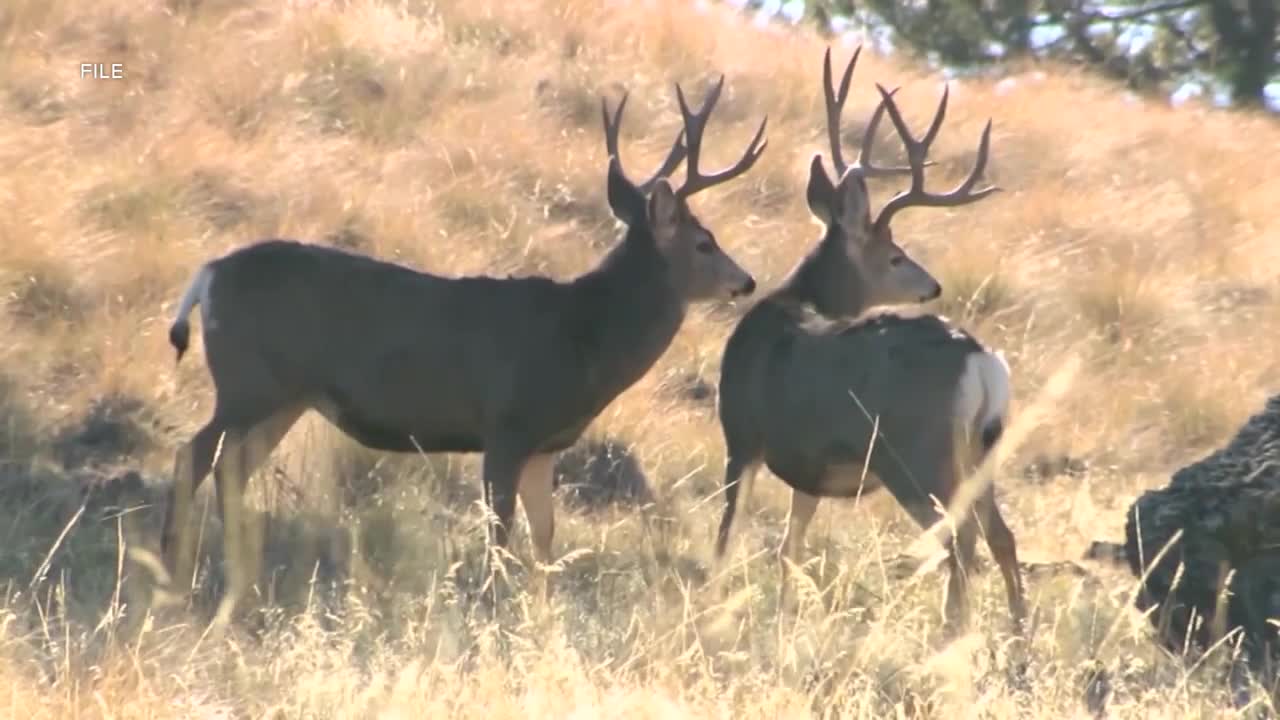


HELENA — In December, the Montana Fish and Wildlife Commission unanimously voted to implement a sales cap for non-resident general deer licenses. The cap would be half of the number of general deer licenses, separated from the elk combination licenses.
“Something has to be done because we have a lot of overcrowding,” said Fish and Wildlife Commission Chair Lesley Robinson.
(Watch: Looking at non-resident and resident deer hunter numbers in Montana)
Robinson proposed the amendment due to concerns she was hearing in both her region and across the state.
“I chose to bring forward this policy to not release approximately 2500 non-resident deer tags to protect the resource, and after speaking to several Montana hunters and landowners, the overwhelming response was that there are very few deer and too many non-resident hunters on the grounds,” Robinson said.

With around 2500 fewer licenses, Fish, Wildlife, and Parks estimates a $1.7 million annual shortfall in license revenue for the department.
FWP director Christy Clark said, “We won't see any change in the experience that hunters and recreationists have now; it will remain ultimately the same, but what it will impact is how much money we have to put towards those programs that would provide additional access.”
Organizations like the Montana Outfitters and Guides Association feel they could see the repercussions.
“We look at the real economic damage on small businesses that support gas, food, lodging for hunting, and we ask that be weighed out when making these decisions,” Will Israel, the MOGA executive director, said.

Israel also shared that he understands the amendment, especially when it comes to mule deer populations.
“I appreciate the hard work and effort that goes into reducing some of this pressure; there is real pressure,” Israel said.
We took a look at and broke down the FWP public data for resident and non-resident hunters since 2003.

Over the past two decades, there has been a steady increase in non-resident hunters, with the average of the last five years being around 20,000 more non-resident hunters compared to 20 years ago.
On the flip side, resident hunting numbers have been decreasing in the past twenty years. With an average of around 172,000 resident hunters for the past five years, a 20,000 decrease compared to the average from twenty years ago.
The Fish and Wildlife Commission agreed there will be an impact from decreasing the number of non-resident deer licenses, but believes this is the right course forward for now.
Clark said, “We just have to see what the impacts are going to be, if they will get that relief in reducing those non-resident numbers, it is one to see and one to watch.”
This change will be effective beginning in the 2026-2027 hunting season.
