

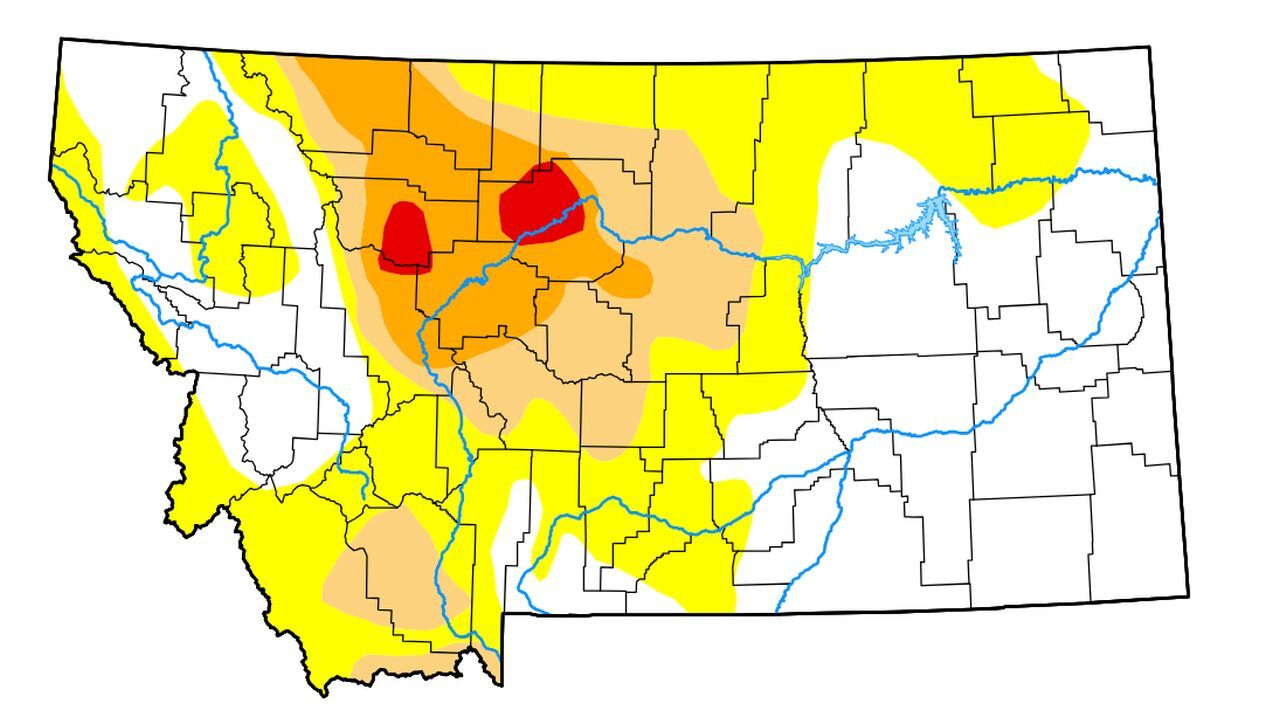

GREAT FALLS — Montana is heading into February with unseasonably warm temperatures and dry conditions, prompting concern across the state’s agriculture community, particularly in areas already facing drought.
According to the latest U.S. Drought Monitor, severe to extreme drought continues to impact much of north central and central Montana, regions heavily reliant on winter snowpack and spring precipitation to support crop growth.
While most crops remain dormant this time of year, producers say the coming months will be crucial in determining whether conditions improve. Winter wheat, one of Montana’s major crops, is currently in its dormant phase, meaning it is not yet actively growing.
Brianna Juneau reports - watch the video here:
Ryan Pfiefle, a producer in Power in north central Montana, says the lack of moisture is on his mind as he prepares for the upcoming growing season. Pfiefle grows winter wheat and plans to plant barley in March or April for use in his distillery business.
“The dry weather is certainly concerning,” Pfiefle said. “Some nice wet snow would be nice.”
Despite the ongoing dryness, Pfiefle says there is still time for precipitation to arrive before crops begin actively growing.
“Not in panic mode yet,” he said. “We got some time. Hopefully something shows up in a month or two.”
Pfiefle noted that the warmer-than-average temperatures have not negatively impacted winter wheat so far. Because the crop remains dormant through winter, it typically waits for favorable conditions in April to begin growing.
Additionally, while a lack of snowpack can sometimes raise concerns about cold damage due to missing insulation, Pfiefle says this winter has not brought prolonged extreme cold that would pose a significant risk. The absence of sustained sub-zero temperatures has helped limit potential damage to crops, even without a consistent snow blanket.
However, snow is a fundamental source for moisture because of its slow melt, seeping into the soil as opposed to drying out like rain. As Montana looks ahead to spring, producers say moisture will be key not only to support crops, but also to improve overall soil conditions following several years of drier-than-average weather.
For now, many farmers remain watchful but cautiously hopeful that winter and early spring storms could still bring much-needed precipitation to the region.
