



HELENA — Amid the ongoing controversy over federal immigration enforcement in Minneapolis, immigration policy was in the spotlight in the city of Helena Monday night.
The Helena City Commission voted 4-1 on Monday to adopt a resolution, clarifying policies for when and how the Helena Police Department will cooperate with federal immigration officials. The debate – already scheduled – ended up happening just days after a Border Patrol agent shot and killed a man in Minneapolis.
“The tactics and actions of federal immigration officers that we've seen across the country is not becoming of any public official, and has only sown more chaos and division,” said Mayor Emily Dean.
Watch the video here:
There was a full crowd on hand for Monday’s meeting, with several hundred people in attendance. The commission chambers were filled to capacity, so the city set up three overflow rooms for people wanting to give public comment on the resolution. Even more remained standing in the hallways and stairwells.
Of more than 80 members of the public who commented, all but a few were in favor of the resolution.
“You cannot control what federal law enforcement does, but you can expect what our Helena Police Department does, and how you as local city government chooses to interact with ICE and other federal law enforcement agencies – or not,” said Lily Clarke.

Helena leaders say they’ve been taking a lot of questions recently about their cooperation with Immigration and Customs Enforcement – particularly since July, when Helena resident Christopher Martinez was arrested after a traffic stop and detained for immigration violations. They’ve been working on possible language for a few months.
Leaders said the resolution mostly restated policies HPD has already been following, including provisions saying the city won't disclose a person's sensitive information like immigration status unless required by law, that HPD won’t stop or investigate someone solely because of suspected immigration violations, and that the city won’t enter into a “287(g) agreement” with the federal government to perform immigration enforcement functions.
The resolution also says HPD officers have discretion to ask U.S. Department of Homeland Security officers to identify themselves and “unmask,” if they believe that’s not interfering with law enforcement operations. Federal agents using masks during sweeps has been one of the tactics that opponents of President Donald Trump’s immigration enforcement have been most concerned about.
“In the past, in normal times, if someone had asked me, do you think that locals and county and state and federal agencies should collaborate in the enforcement of our drug and immigration laws, I would have said of course,” said Martin Finnegan. “But this is not the past, and these are not normal times.”
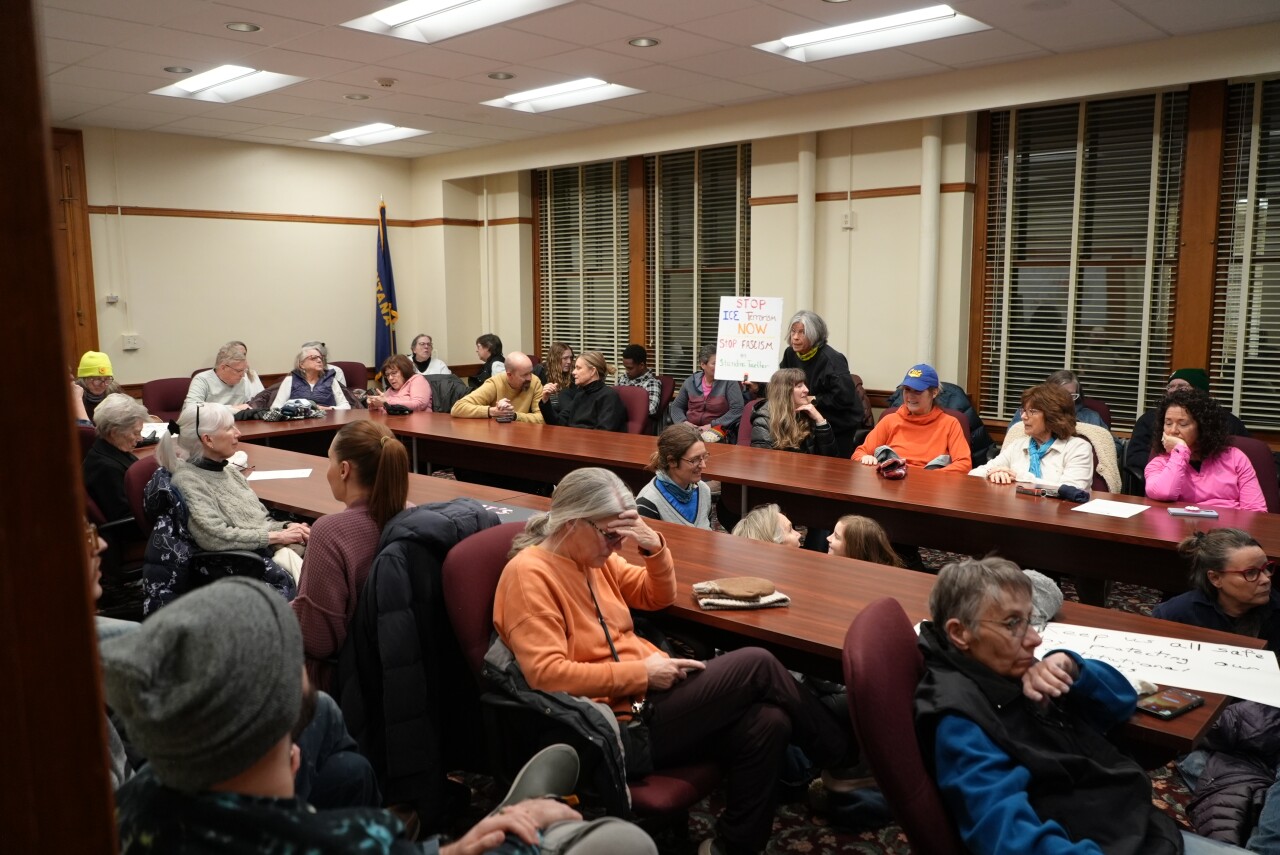
Many in attendance Monday said that the language in the resolution didn’t go far enough. They backed a set of amendments proposed by Commissioner Melinda Reed, which called for HPD to provide additional data to ensure there’s no racial profiling in traffic stops, and to give a full accounting of when they’ve cooperated with immigration authorities. Reed’s amendments also proposed slightly different language on unmasking, which she said would create a general “expectation” that HPD would ask federal agents to unmask.
However, City Attorney Rebecca Dockter raised concerns about the amendments, saying they could create confusion with the law, and that HPD had no authority to demand or compel federal authorities to unmask.
Three out of five commission members – Dean and Commissioners Ben Rigby and Sean Logan – voted against all of Reed’s proposed amendments. Despite that, Reed said the final resolution was an important step for the city.
“This is what democracy looks like, and this is what it means to be the change you wish to see in the world, so thank you,” said Reed.
The only member to oppose the final resolution was Logan, who said he was satisfied with the sections dealing with HPD’s existing policies and procedures, but he had concerns about the provision on unmasking.
“This will put our officers in a very difficult position and lends itself to the possibility of HPD interfering with or even obstructing federal law enforcement,” he said.
Dean said she appreciated everyone who gave testimony on this issue over the past months.
“I hope that you will provide similar comments to your members of Congress, who are responsible for passing the laws that govern federal law enforcement and immigration law – including the Senate, who right now has a funding bill directly related to immigration enforcement before them in the next coming weeks,” she said.
A number of those who testified Monday praised HPD Chief Brett Petty for the department’s withdrawal from a joint investigative task force that also included federal Border Patrol agents.
HPD, along with the Lewis and Clark County Sheriff’s Office, had been a longtime member of the Missouri River Drug Task Force, an interagency partnership between federal, state and local law enforcement that investigates drug trafficking in Montana. However, the department pulled out Jan. 1. A city spokesperson said it came as the task force developed a new operating agreement that added Border Patrol agents in Helena and Bozeman.
“HPD decided to withdraw from the task force to make sure the HPD drug detective is focused on local drug activity, but that detective will continue to communicate and coordinate information with the task force about criminal drug activity,” they said.
Lewis and Clark County Sheriff Leo Dutton told MTN he’s disappointed in the move.
“We're not big enough that we can just go our separate ways,” he said. “Helena and Lewis and Clark County need to cooperate, and we need to work together.”
Dutton says he’s concerned about conflicts between agencies if HPD is investigating drug cases separately from the task force. He says local law enforcement is not doing immigration enforcement or working for federal authorities through the task force.
“I can't tell a federal agency when or when they can't work, but they have agreed that when they're working with our task force, they will stay strictly to the human trafficking and working illegal drugs that are poisoning our community, our citizens,” he said.
The city spokesperson said Helena police have had and will continue to have good working relationships with federal law enforcement, and that this move just allows their staff to remain focused on the community.
