



GREAT FALLS — GREAT FALLS — Students at the University of Providence are putting months of work on display as part of the school’s 11th annual Research Symposium.
The event showcased nearly 50 student-led projects spanning several disciplines, including biology, business, exercise science, forensic science, psychology, and nursing.
Madison Collier reports - watch the video here:
Dr. Mykal Gernaat, a forensic science professor at the university who helps organize the event, said, “We have almost 50 posters here today, represented by several majors.”
The symposium features both class projects and senior capstone research, giving students an opportunity to present their findings to professors, peers and judges from across campus.
For many students, the work goes far beyond the classroom.
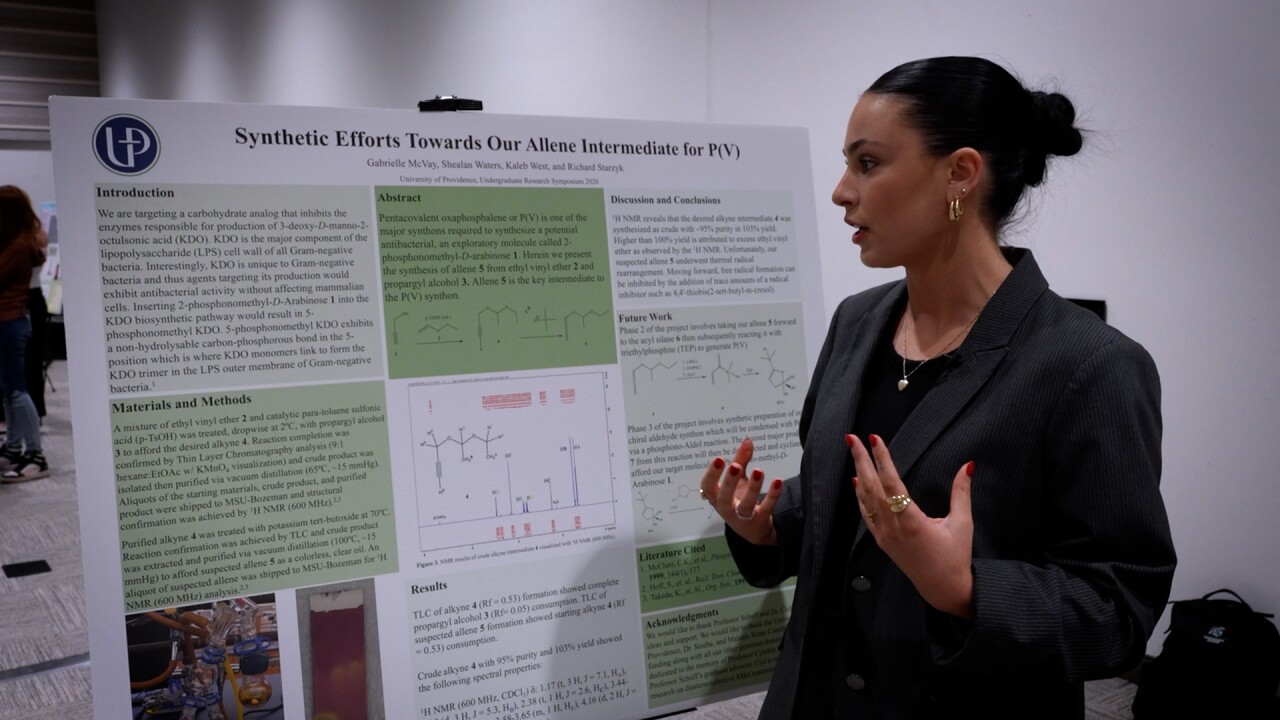
Gabrielle McVay, a senior studying biology, has spent more than a year working on a project aimed at developing a potential new antibiotic, targeting bacteria that are increasingly resistant to existing treatments.
“This is the start of something really grand,” McVay said. “This will take years to complete.”
Her research focuses on gram-negative bacteria, which are known to be especially difficult to treat due to their structure. While her portion of the project is still in progress, she says it could contribute to long-term advancements in healthcare.
Other projects at the symposium focus on forensic science, with students examining how evidence behaves under different conditions.
Erin Hikiji, a forensic science senior, studied decomposition and how environmental factors affect the process, research that can help investigators estimate time of death.
“I was looking at decomposition… which is very important for investigators to determine how long a person has been deceased,” Hikiji said.
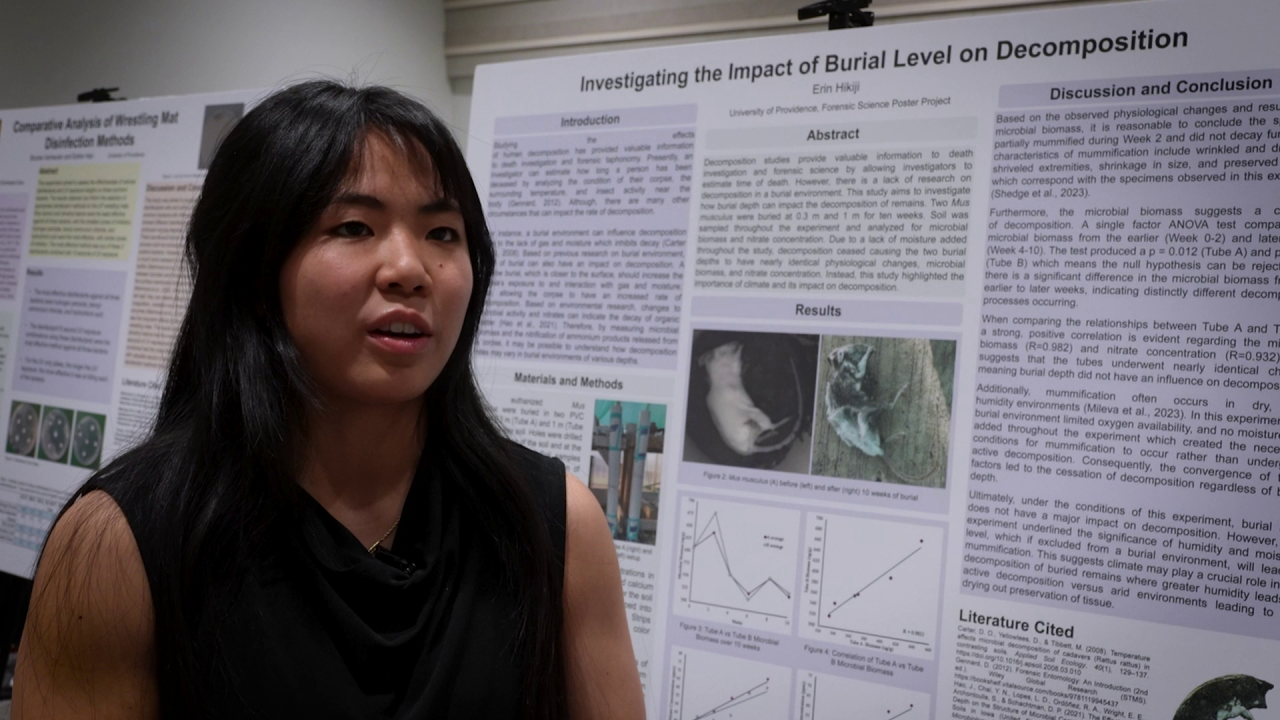
Her findings showed that climate may play a larger role than burial depth, with one test subject mummifying due to dry conditions, something she says could guide future research.
Meanwhile, fellow senior Brooke Sedlock tested how DNA evidence holds up under different environmental stressors, including heat, water and soil.
“I was able to find sperm cells on all four days,” Sedlock said. “That was really surprising.”
Her results challenged her initial hypothesis, particularly in heat-damaged samples where DNA was still detectable despite anticipated degradation.
Faculty say the symposium is about more than just research, it’s about preparing students for what comes next.
“The value in doing an original research project… is invaluable,” Gernaat said. “And just standing here and presenting their research is a really good skill to gain.”
Students also say the event gives them a rare opportunity to step outside their own fields and see what others have been working on.
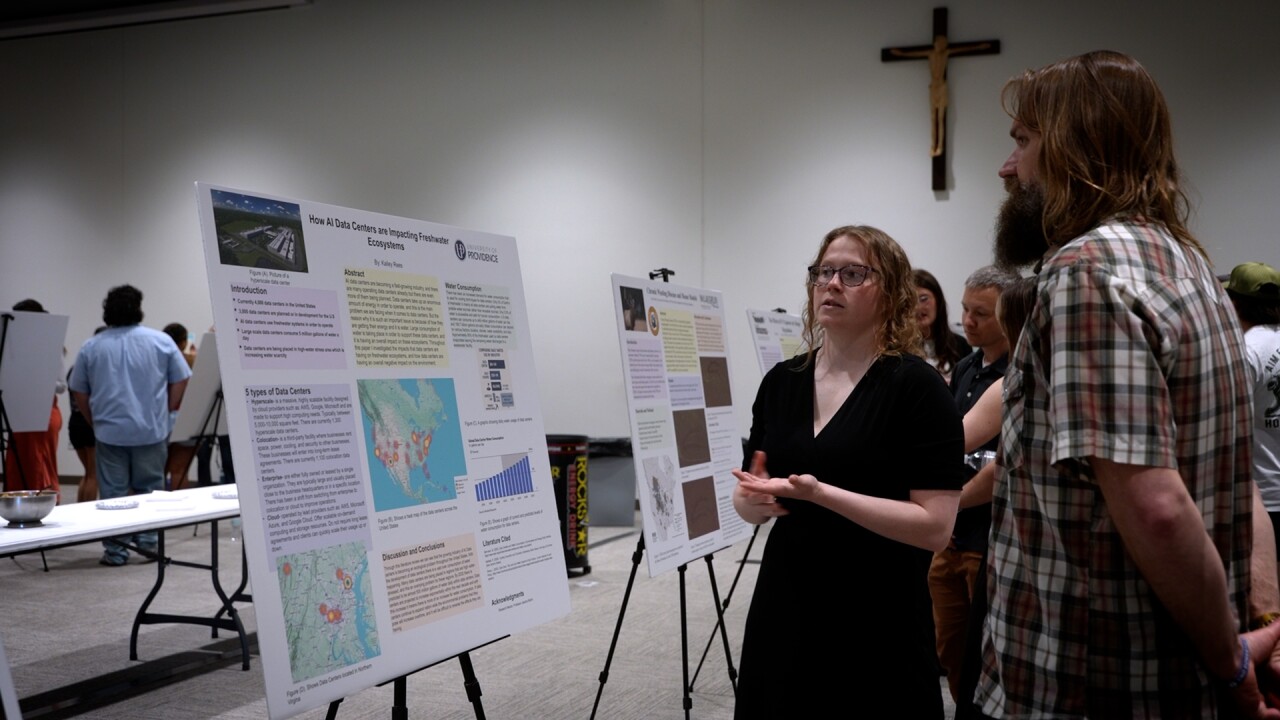
“It’s really cool to see what direction everybody’s gone,” Hikiji expressed.
As graduation approaches, many of the projects on display represent the culmination of four years of study in Great Falls, while also serving as a starting point for future careers.
Some students, like Sedlock, are already preparing for what comes next, with plans to enter the workforce in their field shortly after graduation.
