

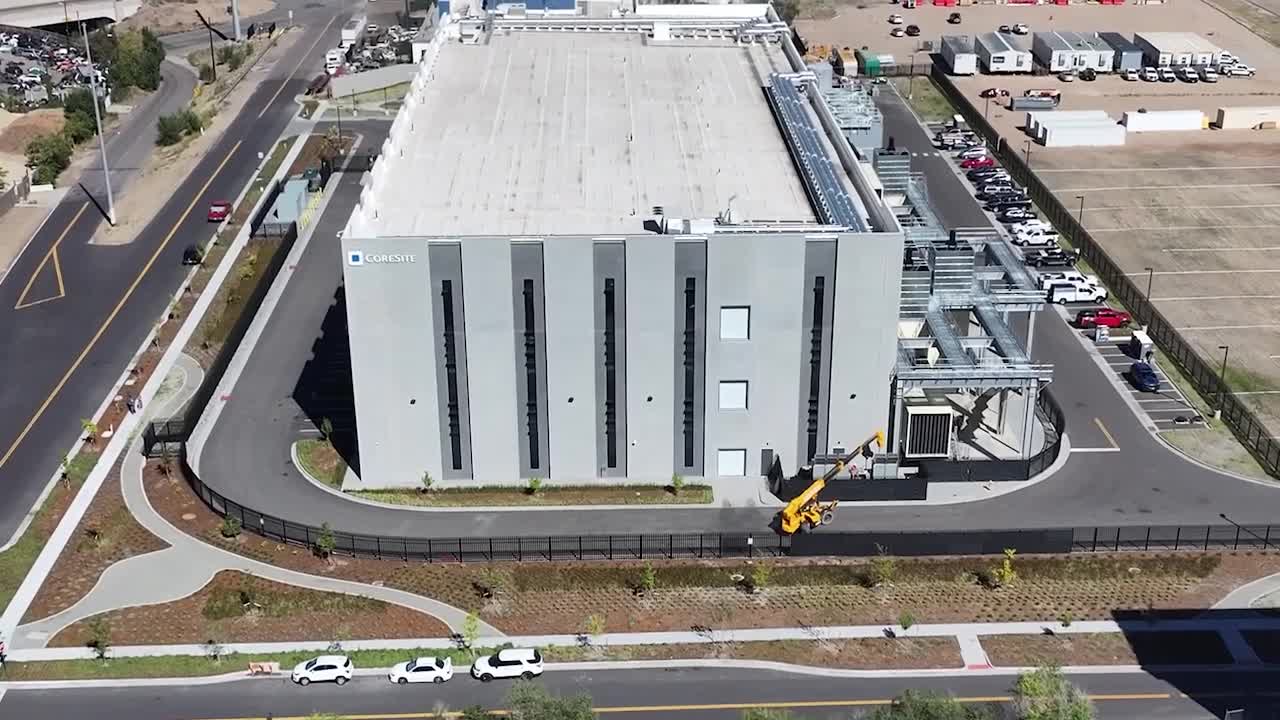


On one side of 49th Street in Denver is one of the only parks in one of the most underserved communities in the city. On the other sits what Alfonso Espino describes as the “exact opposite.”
Watch the full story in the video player below:
During the past year, a 180,000 square-foot CoreSite data center went up across the street from Elyria Park in the Elyria Swansea neighborhood in the northeast part of the city.
“It's still shocking,” Espino, a neighborhood activist, said. “I grew up a block away on the same street, Vine Street, at my grandpa’s house and this has always been industrial, but nothing of this scale. Nothing this scary.”
Espino and others began pushing back against the data center in the neighborhood, which historically has been one of the most polluted in the city.
“The cumulative impact of the history of pollution and contamination here was already bad enough and to think about the impact of this data center is really insane.”
That pushback yielded results. In May, Denver City Council, with the support of the mayor, passed a one-year moratorium on all data center applications within the city and will put together a group to form new rules for data centers before the moratorium expires.
And Denver isn’t alone. Nearly 500 towns, cities and counties across the country have passed a moratorium or banned data centers within their boundaries, sparking a national debate as artificial intelligence drives demand while communities worry about the impact on power, water and land.
“Data centers have become the kitchen table conversation, I think, all across America,” said Nicol Turner Lee, director of the Center for Technology at the Brookings Institution.
Lee is studying data center growth across the country and said that the pauses are buying time, but don’t solve what comes next.
“It may not be enough time as the need for more computer infrastructure to power AI is becoming much more of a necessity,” she said.
Denver7 Investigates built a database tracking moratoriums and bans enacted across the country, finding nearly 500 cities, towns and counties that have already decided to hold off on approving any new data centers through September, while many more ponder the possibility.
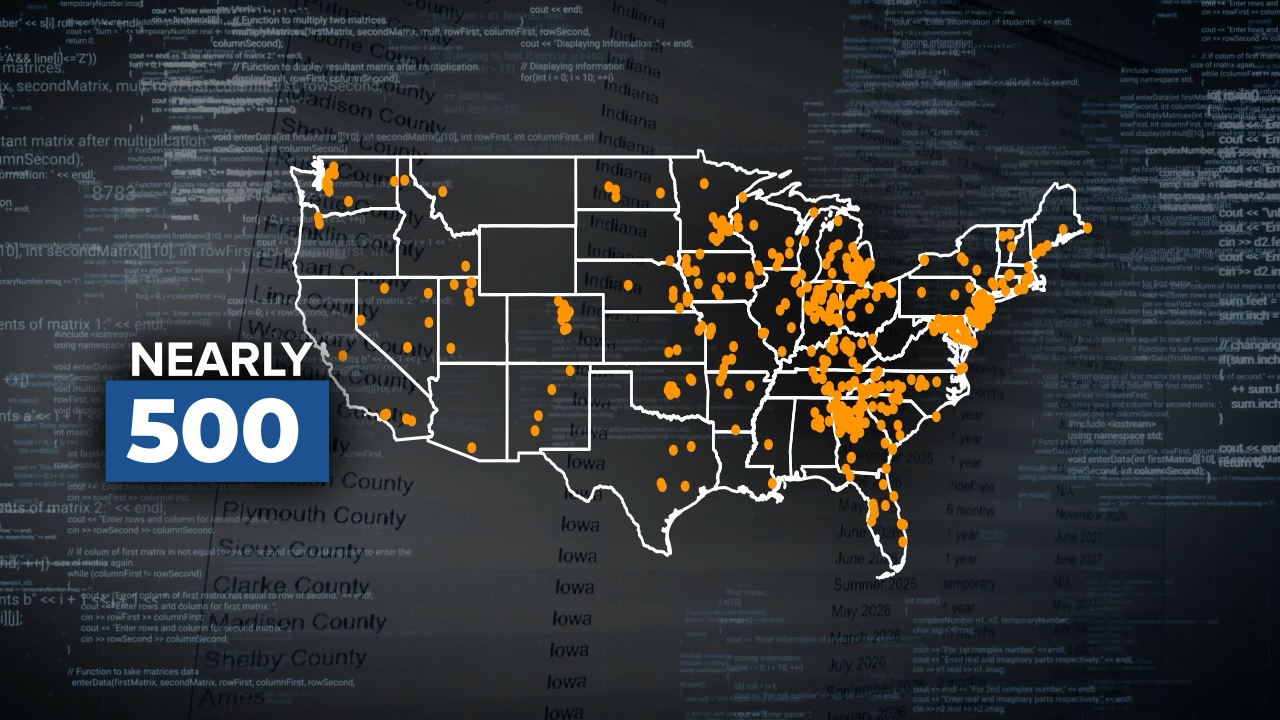
Some places have already expired or been extended, as time lengths vary between as little as 90 days and up to five years in rare cases.
New York passed a statewide one-year moratorium in July, while statewide measures in other states have failed. Maine’s legislature passed a moratorium only for it to be vetoed by the governor.
New Jersey has seen nearly 50 municipalities across the state ban data centers, halting any potential for growth in the industry.
In North Dakota, two counties passed moratoriums in March, only to lift them early. In Texas, Hill County passed a one-year moratorium in May only to rescind it two weeks later after a developer sued the county for $100 million.
In Colorado, Denver helped kick off a wave of moratoriums. Through September, 10 municipalities have moratoriums in place, while Longmont currently has a ban.
Denver’s moratorium came while the CoreSight center was already under construction. Its approval exposed a gap in city oversight as the zoning of the land meant that the project did not require City Council review, according to City Councilman Darrell Watson, who has the CoreSite center in his district.
And while the moratorium didn’t stop this center, it has, for now, delayed two more data center buildings planned for the same site.
“I think we acted quickly to that feedback and we stopped the process before we had two more data centers set to come online in that neighborhood,” Denver Mayor Mike Johnston told Denver7 Investigates.
But now comes the real test as Johnston said the city will work to get new rules in place, even if it means extending the moratorium beyond one year.
“We're gonna put in place meaningful regulations that will make sure that (community members') voices are heard and this moratorium won't lift until those regulations are done,” Johnston said.
Espino, the community activist in Elyria Swansea, said that the moratorium can’t undo what’s already been built, but he is glad for the discussion as communities decide what to do with the time.
“The moratorium is doing one principal thing,” he said. “It’s buying everyone time.”
CoreSight did not respond to Denver7's questions about the data center moratorium in Denver or across the country.
