

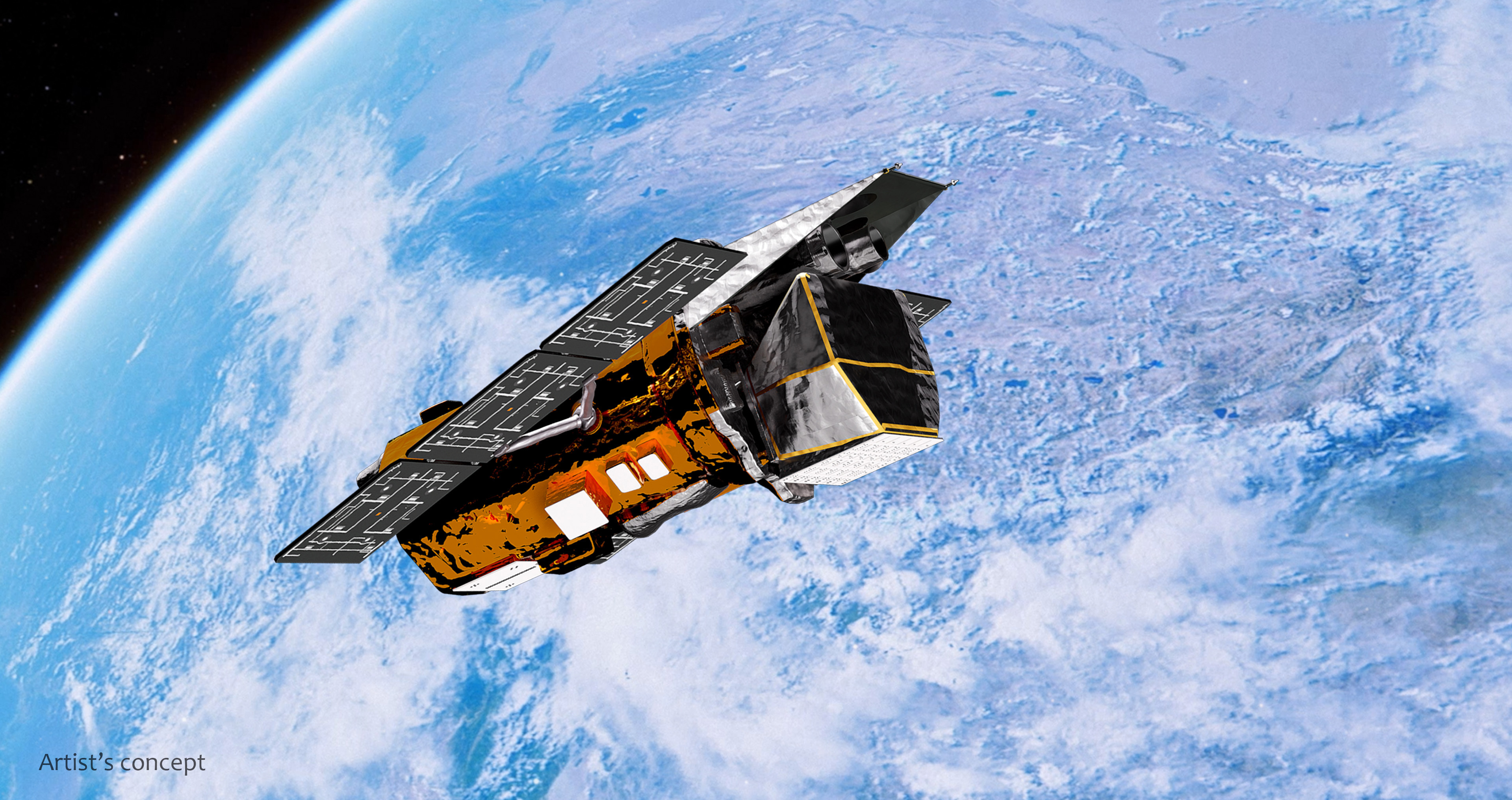


NASA says its Neil Gehrels Swift Observatory has ended its science mission and is expected to re-enter Earth's atmosphere in the coming weeks.
The agency did not provide a specific re-entry date. As of this week, the satellite was orbiting about 171 miles above Earth's surface. The increasingly low orbit and greater atmospheric drag forced NASA to end the mission because the satellite could no longer steadily observe astronomical targets.
As the spacecraft descends deeper into the atmosphere, it will begin to burn up. Any remaining debris is expected to be minimal, as most satellites break apart and largely disintegrate during re-entry.
RELATED STORY | Proposed $5.6 billion NASA budget cut threatens future space missions
The observatory spent more than two decades studying some of the universe's most powerful and mysterious phenomena, helping scientists better understand gamma-ray bursts, supernovas, black holes and other cosmic events.
"Swift delivered an incredible, lasting return on investment for the nation, designed for a two-year primary mission but productive for more than 10 times as long," said Shawn Domagal-Goldman, director of the Astrophysics Division at NASA Headquarters in Washington. "In that time, Swift played a major role in advancing our understanding of the changing universe and was part of a revolution in astrophysics that showed how critical rapid-response observations are to the entire community."
NASA said Swift's discoveries contributed to about 7,000 scientific papers. During its mission, the observatory studied thousands of gamma-ray bursts and more than 1,400 supernovas.
RELATED STORY | A US-Russian space crew lands safely in Kazakhstan after an 8-month stint on the ISS
Swift also observed stars being torn apart by black holes, conducted an all-sky X-ray survey and studied comets and asteroids.
The spacecraft collected more than 1.5 million images and generated more than 12 terabytes of scientific data.
