

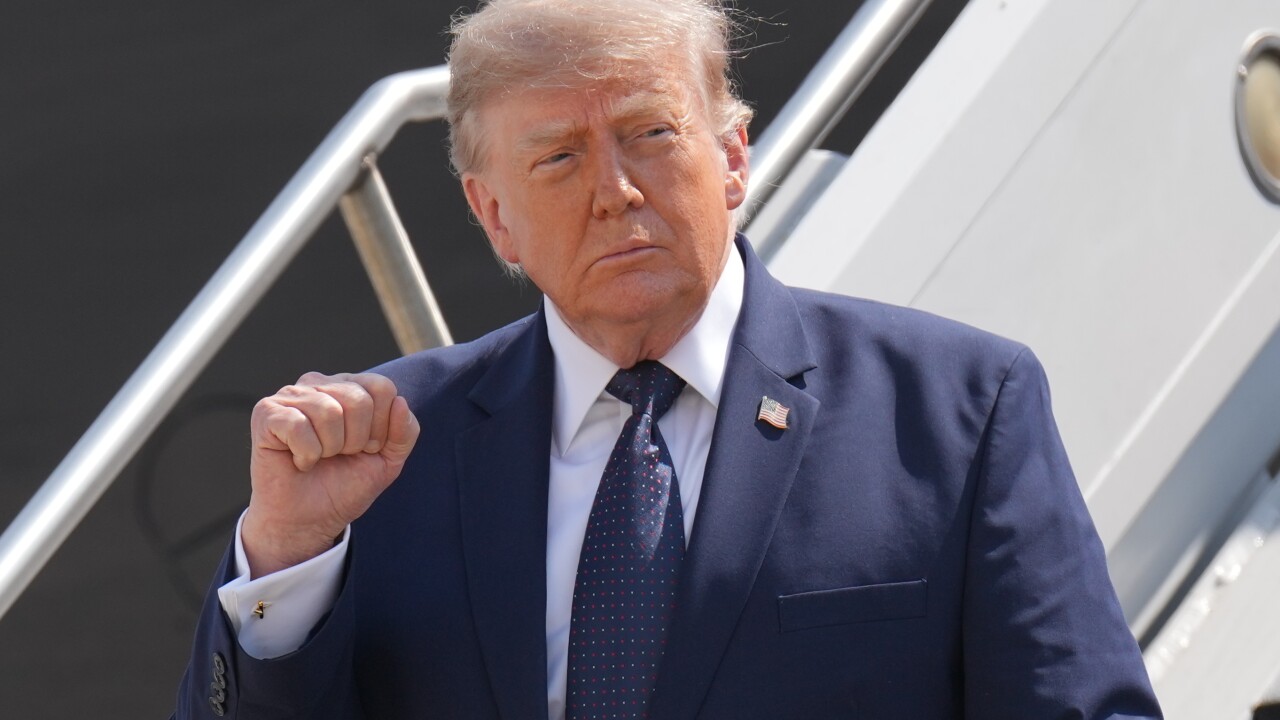


President Trump used his prime-time address Thursday to cast doubt on the security of U.S. elections ahead of the midterms.
He made a series of claims during his remarks alleging that China compromised election data by obtaining voter files, that the intelligence community downplayed information about Chinese meddling, and that the government has known about potential vulnerabilities in election infrastructure and alleged fraud.
But the documents the president cited don't support his sweeping claims, and don't provide evidence of manipulated infrastructure or any actions that changed election outcomes.
"The People's Republic of China carried out what is believed to be the largest compromise of election data in history resulting in China is elicit acquisition of 220 million us voter files," President Trump said during his address. "That information includes names, addresses, phone numbers, political party preference is another sensitive data that would be needed to register to vote and engage in other this area's activities, which is exactly what was happening. This data loss presents an unprecedented election security nightmare."
RELATED NEWS | President Donald Trump claims new documents show widespread vulnerabilities in US election security
Scripps News has reviewed the documents released on Thursday, many of which are heavily redacted or entirely blank. They largely show a belief that adversaries have the capacity to conduct influence measures and potentially manipulate election data. But they do not show that there were specific plans to do so, and they do not show that any manipulation occurred in the United States.
One tranche of documents in particular highlights a disagreement in the intelligence community during the 2020 election about whether China influenced the election. One dissenting analysis suggests that the Chinese government engaged in "at least some level of influence targeting U.S. voters and candidates with the knowledge that their activities could have an effect on the election outcome."
Some documents allege, through FBI information, that the Chinese government produced fraudulent U.S. driver's licenses that could allow for votes and that they planned to use it for mail-in votes. The documents do not state that there was follow-through.
The documents also allege that China attempted to acquire 220 million U.S. voter files. Experts say much of that information was already available, in some cases for purchase.
"That voter data is available. It's commercially available. And from all reports, to the extent we figured out that the Chinese it acquired it, bought it or just ask for it, which and the American can do. That's the way it works here. There's nothing really nefarious about it," said Steven Cash, executive director of The Steady State.
RELATED STORY | SAVE America Act faces steep odds in Senate despite Trump election speech push
President Trump concluded his Thursday speech by calling on Congress to pass a major election reform bill that is currently stalled in the legislature.
The SAVE America Act would require all voters nationwide to show voter ID at the ballot box. It would also require Americans registering to vote to show documents in person proving their U.S. citizenship. The bill would sharply limit voting by mail, allowing only a short list of excuses for not voting in person — including illness, disability, military deployment, or travel on Election Day.
