

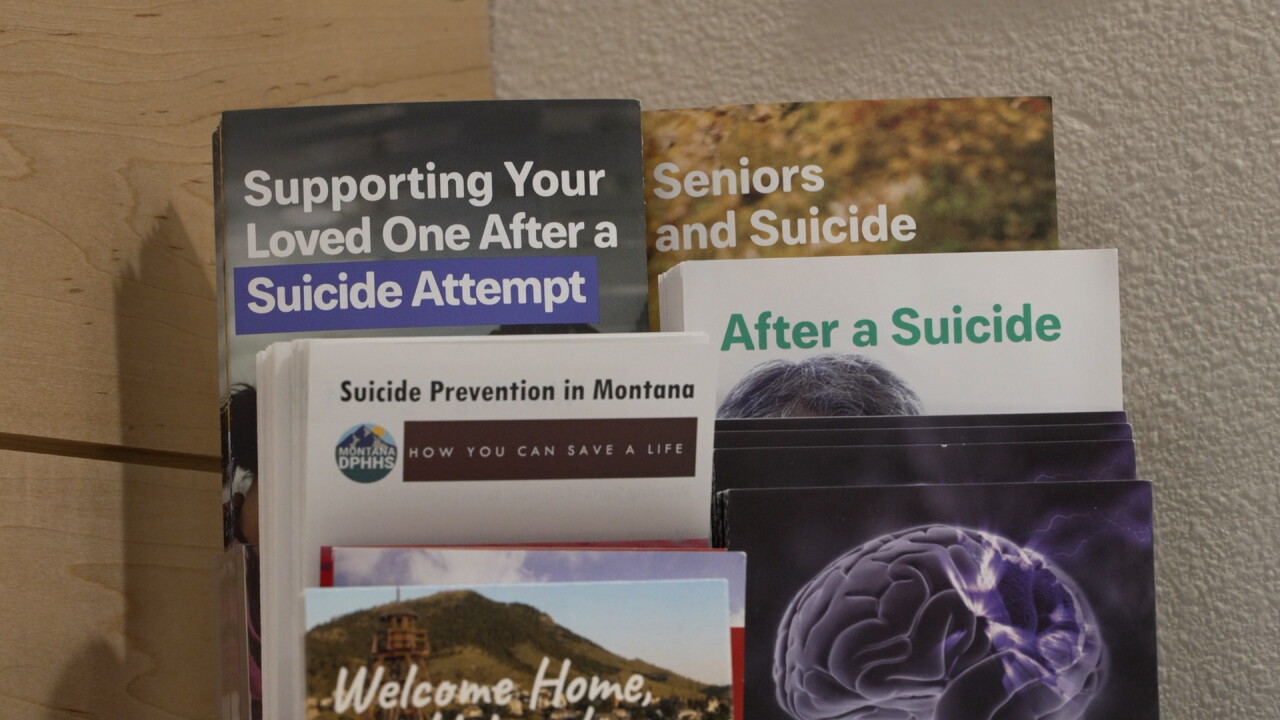


HELENA, Mont. — After eight years of federal funding for suicide prevention efforts across Lewis and Clark, Broadwater and Jefferson counties, local health officials are now working to sustain the programs, training and partnerships built with that money.
Watch the story here:
The funding came through two grants from the Substance Abuse and Mental Health Services Administration, or SAMHSA. The first covered three years and the second five years. Together, the grants provided $625,000 for suicide prevention and response efforts.
“The work just needs to continue with or without the funding,” said Kayla Morris, St. Peter’s Health community based and crisis care delivery manager.
According to Lewis and Clark Public Health, Montana has consistently ranked among the states with the highest suicide rates, at roughly twice the national average.
Over the eight years of grant funding, more than 10,000 people received suicide prevention and response training, a number equivalent to about 10% of Lewis and Clark County’s population.

The training included programs such as Question, Persuade, Refer, or QPR, Mental Health First Aid and Applied Suicide Intervention Skills Training. More than 1,600 middle and high school students across the region also participated in Signs of Suicide training.
“When individuals know what the signs are, then they can take care of their neighbors and their family members,” said Drenda Niemann, Lewis and Clark Public Health health officer.
The grants expired at the end of September. While Niemann said the community now has trainers and materials in place to continue the work, maintaining the same momentum without dedicated funding could become increasingly difficult.
“We tried really hard to build capacity in this community so that trainers still exist and training materials still exist,” Niemann said. “So we will attempt to keep the trainings going, but that will over time be more and more difficult without funding.”
Programs built through the grant will continue
The impact of the funding extends beyond training.
The grants helped launch the Local Outreach to Suicide Survivors, or LOSS, Team. The volunteer-led group works with families following a death by suicide, connecting survivors with resources and support as they navigate grief.
The team has 10 volunteers, all of whom have experienced the loss of someone to suicide themselves. Following a suicide, a survivor and mental health professional can be notified through the coroner and go directly to the family to offer support and resources.
Ali Mullen, a LOSS Team volunteer, said Lewis and Clark County sees an average of approximately 24 suicide deaths each year, and the team responds to most of them.
Mullen said that immediate connection can significantly reduce the amount of time it takes for survivors to seek additional help.
“It takes a survivor an average of about four years to seek help. With the LOSS Team model in place, it cuts that time down to 39 days,” Mullen said.
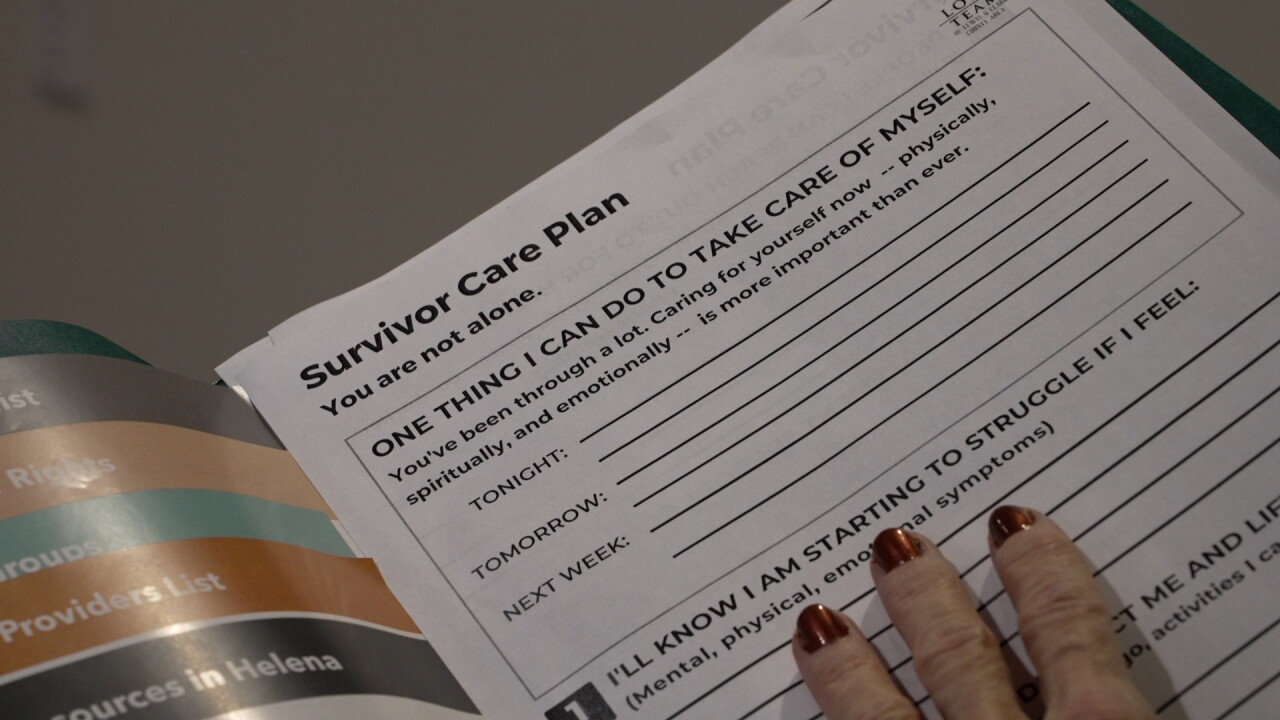
The team also connects survivors with BREATHE, a suicide loss survivor support group that meets on the fourth Tuesday of each month at 6:30 p.m. at St. Peter’s Health.
“We actually see those survivors come through the doors of our suicide survivor support group BREATHE within weeks of LOSS Team contacting them,” Mullen said. “Those survivors are actually getting the support that they need so much sooner.”
Mullen said the LOSS Team plans to continue operating and hopes to bring on additional volunteers.
What comes next
Lewis and Clark Public Health says its suicide prevention work will now focus in part on maintaining the LOSS Team and Safer Communities Montana.
Safer Communities Montana focuses on lethal means safety, including safe firearm storage and the safe storage and disposal of prescription and over-the-counter medications.
Other work made possible through the grants is also expected to continue.
At St. Peter’s Health, the funding helped support employee QPR training. Morris said those trainings will continue, with employees still receiving suicide prevention training.
The grant also helped St. Peter’s make changes to its mobile crisis response program, which has been operating under a 24/7 model since July. That model is expected to continue despite the expiration of the grant.
Morris compared widespread suicide prevention training to learning CPR, giving community members tools to recognize a crisis and know how to respond when someone they know needs help.
“By training QPR and other suicide prevention in our community, it really allows us to all be prepared,” Morris said.
Lewis and Clark Public Health says it will continue looking for additional grant opportunities. In the meantime, officials say maintaining the partnerships established over the past eight years will be critical.
“I think it still means everyone coming to the table,” Morris said. “There’s not funding to it, but the work still needs to continue.”
For Lewis and Clark Public Health, the goal is to make sure the end of the grant does not mean the end of the progress made through it.
